
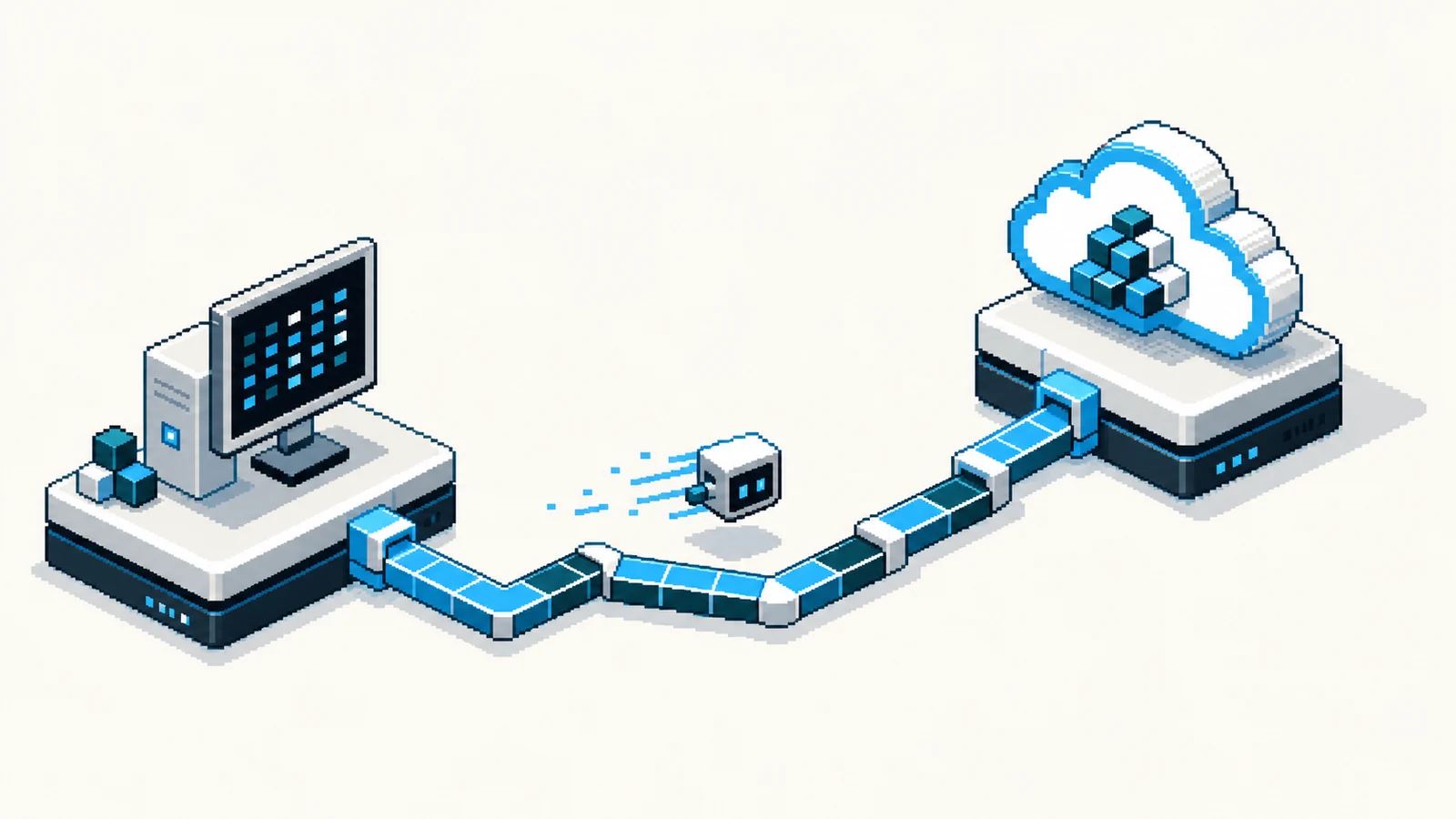
Start with the task environment
A runtime is the environment in which an agent task does its work. Choosing between a local and cloud runtime begins with the task, not with a blanket preference. Ask where the required files and tools live, whether the task needs to continue when a particular computer is unavailable, how a person will review its output, and which environment the team is prepared to maintain.
A local runtime can fit work that depends on a developer’s checked-out repository, desktop tools, or an environment already configured on a specific machine. A cloud runtime can fit work that benefits from an environment available independently of that machine. These are planning considerations, not guarantees about any particular workflow. The right choice can differ from one task to another within the same project.
Compare the practical questions
| Question | Local angle | Cloud angle |
|---|---|---|
| Where are the inputs? | On a known machine | In an available hosted environment |
| When should it run? | While that machine is ready | When the hosted runtime is available |
| How is it reviewed? | Through local artifacts and task history | Through shared artifacts and task history |
| Who maintains it? | The machine owner or team | The workspace or project team |
Inventory dependencies before assigning the runtime. List repositories, command-line tools, connected services, files, and expected outputs. Then identify which of those are already present in each candidate environment. Avoid silently broadening access simply to make a task convenient. If a required dependency is unavailable, either prepare the environment deliberately or reshape the task around material that is available.
Design a portable task boundary
- Refer to project-relative locations when the same structure exists in both environments.
- Keep setup requirements close to the task or its maintained context.
- Write outputs to a location reviewers can identify.
- State environment-specific assumptions instead of treating them as universal.
Some workflows can use both runtime types at different stages. A local task might inspect an active working copy, while a later recurring task operates from material prepared for a cloud environment. Make the handoff an explicit artifact, and avoid implying that the two environments share state unless the workflow actually provides it.
Choose the runtime that matches the work’s dependencies and review path, then document that choice with the task.
Revisit the choice as work changes
A prototype may begin locally because the relevant tools are already there. A stable recurring task may later call for a separately maintained environment. The reverse can also be sensible when hands-on review or local artifacts become central. Treat runtime choice as part of task design, record the assumptions behind it, and revisit those assumptions when dependencies, ownership, or timing changes.
This staging walkthrough illustrates the questions rather than selecting one default. MagicAssist can organize agent work across runtime choices; the team remains responsible for defining the environment and review process that fit each task.